Zocdoc - Find and book doctors
- 4.8
- Rating
- 1.00M
- Installs
- Free
- Price

 Analysis by App-foxy
Finding a doctor is often harder than the appointment itself, especially when you are comparing insurance details, office locations, available times, and the kind of care you need. I found Zocdoc - Find and book doctors most useful as a practical search and scheduling tool rather than as a replacement for a clinic’s own service. It brings several decisions into one place, which can make the first step feel less overwhelming.
The app is a free medical app from Zocdoc, Inc., intended for everyone. It has been available since July 25, 2011, and its current version is 3.229.1 for devices running Android 8.0 or later. Its average rating is 4.8 from around 43 thousand ratings, with about 6.9 thousand written reviews, and it has passed one million installs. Those figures suggest that it has become a familiar option for people who want to arrange healthcare without making a long series of phone calls.
How Zocdoc supports different ways of finding and arranging care
I find it helpful to think of Zocdoc as a way to organize the first decisions around care, not as a complete guide to choosing a clinician. In this section, I focus on how its search and booking approach can fit different routines, from comparing options at home to arranging care around a tight schedule. That practical distinction matters when deciding which parts of the process the app can simplify—and which still benefit from direct contact with a practice.
You May Also Like

 Blood Strike: 2.5 Anniversary
Blood Strike’s Loadouts Turn Every Drop Into a Tactical Gamble
A close look at Blood Strike’s custom loadouts: how fast access to signature weapons reshapes its battle royale rhythm, rewards preparation, and narrows the gap between fights.

 Pandora - Music & Podcasts
Pandora’s Music Is Easy to Start, but Harder to Recover
Pandora’s strength is its low-effort path from a seed to a station. Its weak spot is how much confidence it asks you to place in connection, setup, and quiet recovery.

 8 Ball Pool
 Is Built on Rivalries, Rematches, and Routine
A close look at the rivalries, rematches, shared routines, and unanswered safety questions that turn a quick pool match into a persistent mobile community.

 Samsung Music
’s Quiet Strength Is Playing What You Already Own
Its reach comes less from spectacle than from dependable access to a personal library. That simplicity is both the app’s strongest retention engine and its ceiling.

 AccuWeather: Weather Radar
AccuWeather Review: A Quick, Clear Forecast for Everyday Decisions
For everyday plans, the best forecast is the one you can understand quickly. AccuWeather makes rain timing, radar, and local conditions easy to act on, with a few trade-offs.

 Hill Climb Racing
Why Hill Climb Racing Still Turns Crashes Into One More Run
A tiny car, a bumpy hill and one more upgrade: Hill Climb Racing keeps resurfacing because its simple chaos makes every near-miss feel personal.
More From Our News Desk



Readability and navigation during the search
My first impression is that the app’s central task is easy to understand: choose the type of doctor or service, enter a location, consider insurance, and look through available appointments. That direct purpose matters for people who find open-ended medical searches tiring. Instead of jumping between separate clinic websites, I can begin with a focused list and narrow it according to the details that affect my decision.
The most useful part of the experience is the combination of insurance-aware searching and appointment availability. A doctor may look suitable until I discover that the visit is outside my plan or that the next opening is too far away. Zocdoc encourages me to consider those practical issues earlier, which reduces wasted time. I still treat the displayed information as something to check carefully before booking, but the workflow is more organized than searching the web one office at a time.
Profiles are also easier to assess when I am trying to decide between unfamiliar providers. Reviews can offer clues about other patients’ experiences, while the profile context helps me look beyond a name and specialty. I would not use reviews as a substitute for clinical judgment, but they are useful for noticing patterns in communication, scheduling, or office experience that may matter to someone with particular needs.
For readers who have difficulty processing dense screens, the app’s value comes less from medical explanation and more from reducing the number of places they must inspect. I can make progress through a sequence of concrete choices rather than trying to interpret a large collection of clinic pages. That said, medical terminology can still be confusing, and the app cannot turn every specialty label into plain language. If I am uncertain whether a listed provider handles my exact concern, I would confirm it with the office before selecting a time.
A helpful habit is to decide my non-negotiables before searching. I might need a particular insurance plan, a nearby office, a first appointment after work, or a provider who treats a specific issue. Saving those priorities mentally prevents the attractive-looking first result from taking over the decision. This is especially important when several profiles appear similar and the quickest appointment is not necessarily the most appropriate one.
Motor, visual, hearing, and sensory considerations
From an interaction point of view, booking through a phone can be easier than calling multiple offices. I can review options at my own pace, avoid holding on a line, and return to a profile if I need to think. That is a meaningful advantage for people who find phone conversations difficult, who use written communication more comfortably, or who need time to prepare questions before committing to an appointment.
There is also a practical benefit for users who experience anxiety around healthcare. Searching privately lets me compare providers before speaking with anyone. I can read the available information, check the location, and choose a time without having to explain my situation repeatedly to a receptionist. For someone who becomes overwhelmed by unexpected conversations, that lower-pressure beginning may make it more likely that they complete the booking.
However, digital booking is not automatically accessible for every motor or sensory need. Small touch targets, scrolling through many results, or entering detailed information can be tiring for someone with limited dexterity. People who rely on screen magnification or a screen reader should assess how comfortably their own device handles the current interface. I would not assume that a clean-looking search flow meets every accessibility requirement simply because it is visually uncluttered.
For people with hearing loss, a written appointment workflow may be preferable to arranging care by telephone, but the visit itself remains a separate matter. Zocdoc can help locate and request an appointment; it cannot guarantee that a particular office offers captioning, interpreters, visual alerts, or other communication support. I would contact the office directly and ask specific questions rather than relying on the profile alone.
Sensory needs deserve the same caution. A profile may help me identify a provider and location, but it does not necessarily describe waiting-room noise, lighting, crowding, fragrance, or how flexible the office is about waiting outside or using a quieter space. If those details affect whether I can attend successfully, I would use the app to find a candidate and then call or message the practice to make the arrangement explicit.
Using it when time, location, or energy is limited
The app makes the most sense in everyday situations where the problem is coordination. Imagine I move to a new neighborhood and need a primary care appointment while working irregular hours. I can search near the new address, consider providers connected with my insurance, inspect the available times, and select an appointment without spending an evening opening separate office websites. The benefit is not simply speed; it is having the logistical pieces visible together.
It can also help when a routine need becomes urgent but is not an emergency. A same-day or near-term opening may be easier to find through a scheduling marketplace than by calling offices in random order. I would still use emergency services for severe or life-threatening symptoms. The app is a way to arrange ordinary care, not a triage service and not a substitute for immediate medical help.
For people with limited transportation, location filtering can be more than a convenience. A nearby office may determine whether an appointment is realistic, particularly when someone depends on a caregiver, public transit, or a short window between other responsibilities. Before booking, I would check the exact office location and think about the full journey rather than assuming that a provider’s general area is close enough.
Another useful scenario involves coordinating care for someone else. A family member may be able to compare options on behalf of an older adult or a person who finds digital tasks exhausting. The important boundary is that the person receiving care should remain involved in decisions whenever possible. The app can organize the search, but it does not remove the need to confirm consent, medical history, transportation, and communication preferences with the patient and office.
People with fluctuating energy may appreciate being able to search at a time when they feel capable, rather than having to call during a narrow office schedule. I can prepare the details first, pause, and return when ready. That flexibility is one of the strongest inclusion benefits I noticed. It does not solve every barrier, but it shifts some of the work away from a single stressful phone conversation.
Where the experience still creates barriers
The biggest limitation is that a searchable appointment is not the same as a fully suitable appointment. A time may be available, yet the office may not have the equipment, communication support, physical setup, or clinical experience I need. Reviews and profile information can help me form questions, but I still have to verify important accommodations directly. That extra step can be frustrating for users who already spend considerable effort advocating for basic access.
Insurance filtering is helpful, but insurance itself can be complicated. Plans may have different rules for networks, referrals, specialist visits, or out-of-pocket costs. I would not treat a search result as a final financial guarantee. Before attending, I would confirm coverage with both the practice and my insurer when the cost would be difficult to absorb. This is one area where the convenience of the app should not replace careful checking.
Availability can also create a misleading sense of choice. The fastest opening may be with a provider farther away, at an inconvenient time, or at an office that does not match my communication needs. If I am tired, anxious, or under pressure, I may be tempted to accept the first workable result. A better approach is to compare the appointment time with the practical demands of getting there, preparing for the visit, and recovering afterward.
There is a further barrier for people who do not have reliable internet access, a compatible device, or confidence with digital forms. A free app is not the same as free access to the technology needed to use it. In those circumstances, a clinic’s phone line, a community health service, or help from a trusted person may be more effective. Zocdoc is best viewed as an additional route to care, not the only route.
The app also cannot guarantee continuity. Booking one appointment does not necessarily mean that future visits, records, referrals, or follow-up arrangements will be managed in the same place. For ongoing treatment, I would ask the office how later appointments are handled and whether I should use its own patient portal. Zocdoc is strongest at helping me get started or locate an available provider; it is less suited to replacing the complete relationship with a medical practice.
Privacy and comfort should influence how I use it. I would enter only the information needed for the search and avoid treating a public review area as a place for personal medical details. Reviews are most useful when they describe the practical experience without revealing sensitive information. If a question is too personal for a profile or review, I would reserve it for a private conversation with the office or clinician.
Who should use it, and who may prefer another option
I would recommend Zocdoc to someone who wants a structured way to compare doctors, insurance compatibility, locations, and appointment openings. It is particularly useful for people changing cities, looking for a new provider, managing a busy schedule, or feeling uncomfortable with repeated phone calls. The free price also makes it easy to try without adding a separate booking fee from the app itself.
I would be more cautious recommending it as the main tool for complex long-term care. Someone who already has a trusted clinic may get better continuity through that clinic’s own portal or scheduling desk. A patient with highly specific accessibility requirements may also prefer to contact practices directly, because a conversation can reveal details that a profile cannot. Likewise, anyone facing a medical emergency should use the appropriate urgent or emergency service rather than spend time comparing listings.
The age rating of Everyone fits the app’s general purpose, but that does not mean every healthcare decision is simple for every age group. A younger user may need a parent or guardian involved, while an older adult may benefit from assistance with reading, transportation, or follow-up. The app can support the administrative part of the process, but responsibility and consent still belong in the real-world care relationship.
My inclusive verdict after using the booking workflow
What I like most is the way Zocdoc turns a vague task into a series of manageable decisions. Searching by insurance, reviewing providers, and looking at open appointments can remove several common obstacles at once. For users who prefer written information, need to work around a changing schedule, or want to avoid making many calls, that is a real improvement over starting from a general web search.
My main reservation is that convenience can hide unanswered access questions. I would never assume that a listed provider is suitable for my disability, communication style, sensory needs, or budget until I confirm those points. The app helps me create a shortlist; it does not perform the personal verification that makes an appointment genuinely usable.
Overall, I see it as a strong first step for routine medical scheduling and a useful tool for people who need more control over how they search. Its best experience comes when I use the filters thoughtfully, read reviews as clues rather than proof, check the practical journey, and contact the office about accommodations before booking. For accessible healthcare planning, the smartest workflow is to use the app for discovery and scheduling, then use direct communication to close the gaps.
That balance is why I would recommend it to a friend who is trying to find ordinary care without unnecessary back-and-forth. It saves effort and makes availability easier to see, while still leaving room for the careful questions that no booking app can answer on its own.
FAQs for Zocdoc - Find and book doctors
01What is Zocdoc and how does it work?
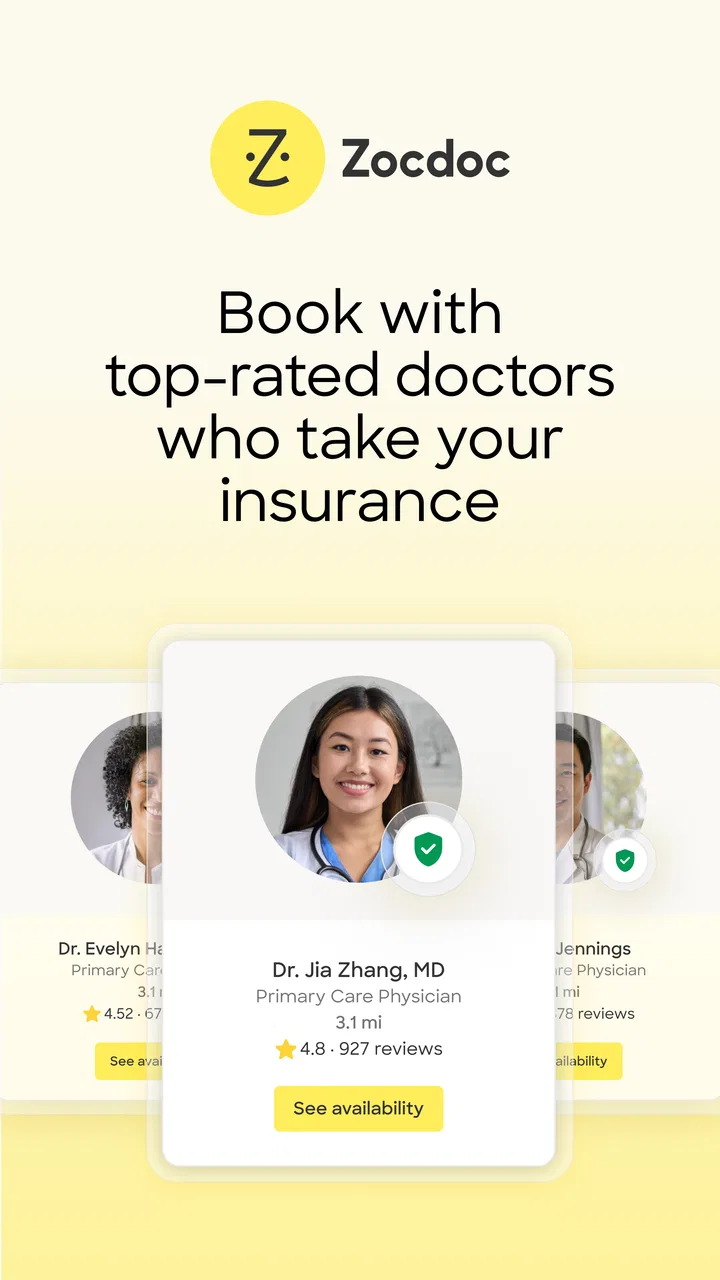
Zocdoc is a user-friendly app that helps you find and book appointments with doctors, specialists, and healthcare providers near you. After entering your location and the type of doctor you need, Zocdoc displays a list of available professionals, along with their ratings, reviews, and available appointment times. You can book directly through the app.
02Is Zocdoc free to use for patients?
Yes, Zocdoc is free for patients to use. There are no hidden fees or charges for booking appointments through the app. Doctors listed on Zocdoc pay a fee to be included, which ensures a wide database of available healthcare professionals for users to choose from.
03How reliable are the reviews and ratings on Zocdoc?
Zocdoc ensures that all reviews and ratings are from verified patients who have actually visited the doctor. This verification process helps maintain the integrity of the feedback, allowing users to make informed decisions based on genuine patient experiences.
04Can I use Zocdoc for all types of medical appointments?
Zocdoc covers a wide range of medical fields, including general practitioners, specialists, dentists, and more. However, availability may vary depending on your location. It's best to search within the app to see if the type of medical professional you need is available in your area.
05Is my personal information secure on Zocdoc?
Zocdoc prioritizes user privacy and employs strong security measures to protect personal and medical information. The app uses encryption and other security protocols to ensure that your data is safe, and it complies with healthcare privacy regulations like HIPAA.
Pros
- User-friendly interface for easy navigation.
- Wide range of specialists available.
- Real-time appointment booking feature.
- Read verified patient reviews.
- Insurance compatibility check.
Cons
- Limited availability in rural areas.
- Some profiles lack detailed information.
- Occasional app crashes reported.
- Not all insurers are supported.
- No direct messaging with doctors.

Zocdoc - Find and book doctors
Gallery